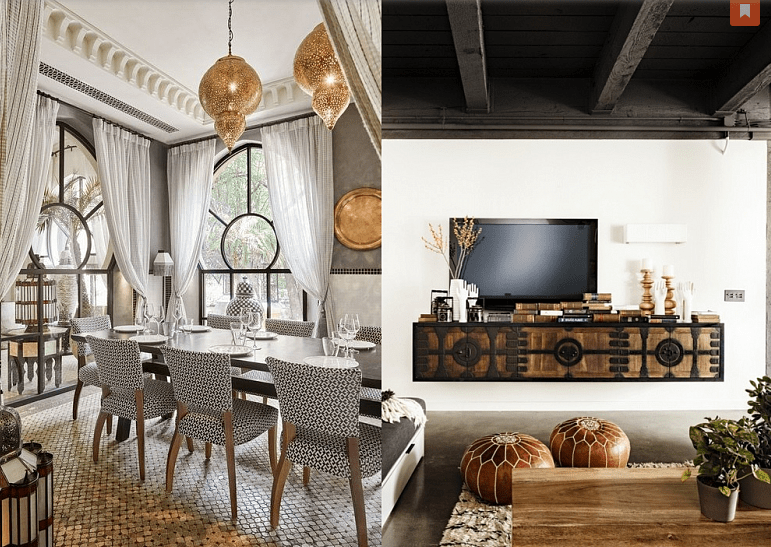
Moroccan style in the interior is an original hybrid of different cultures, a fusion of Eastern and European ideas about aesthetics and comfort.
From the late 19th to the mid-20th century, Morocco was the object of rivalry between Spain, France, Britain and Germany, and only in 1956 the country gained independence.
From the colorful exotic tangle of Arab, Mediterranean and African motifs, two main “threads” of Moroccan interior design can be distinguished: Berber and Hispano-Moorish.
Main ingredients
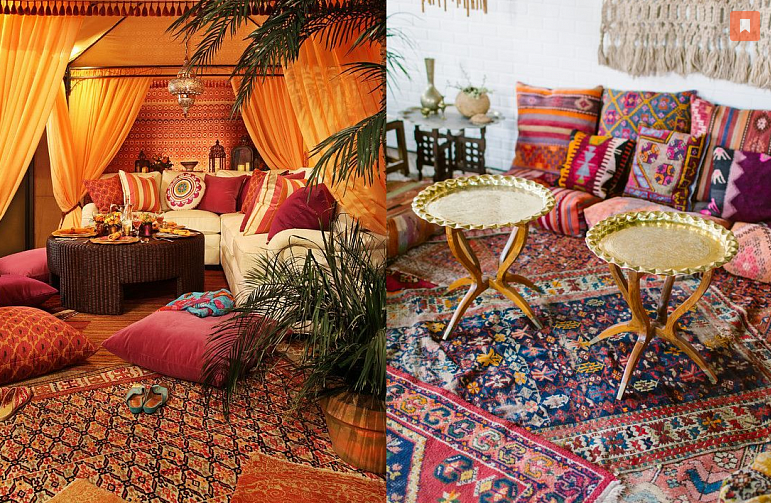
The Moroccan interior is alien to the principle of “looking but not touching”, its goal is to establish an emotional connection with a person through touch.
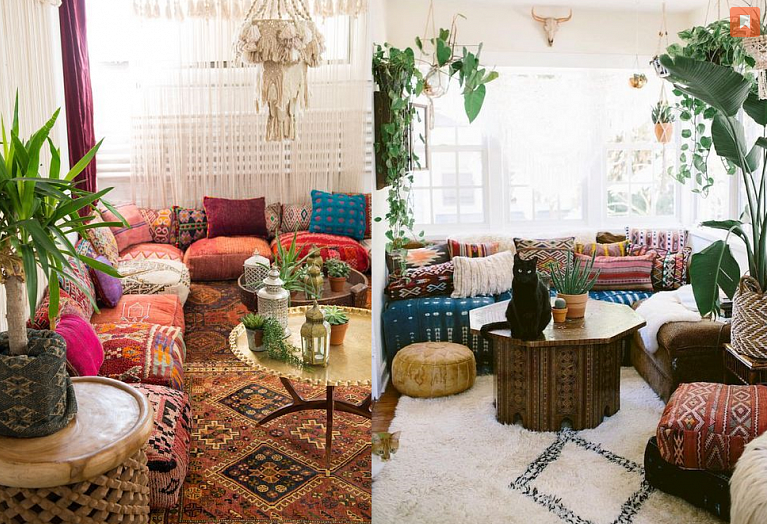
Such an interior is densely populated with pillows and poufs, which, by their very appearance, should incline towards hedonism and a recumbent lifestyle.
The walls in such an interior are traditionally covered with limestone tadelakt plaster, resulting in a glossy surface reminiscent of the texture of natural stone. Decorating the interior in an oriental style, it is not necessary to chase after authentic plaster, it can be replaced by more affordable analogues: “Venetian” or textured wallpaper.
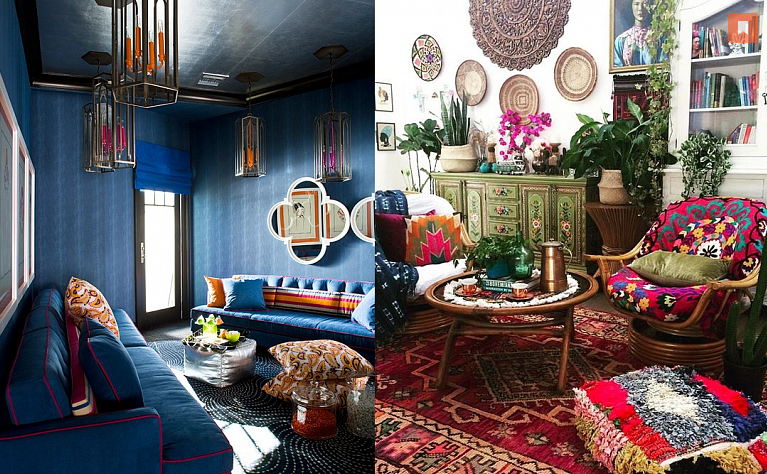
A special role is given to blue. Moroccan blue is a dazzling ultramarine. This shade can be seen everywhere in Morocco, for example, on the walls of the Villa Jacques Majorelle in the legendary blue garden of Marrakech. By the way, this shade was developed by Majorelle himself, so he is also known by his name.
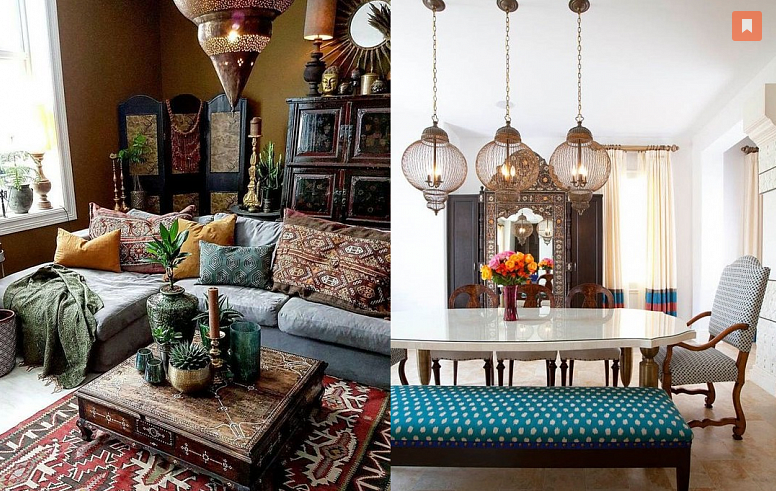
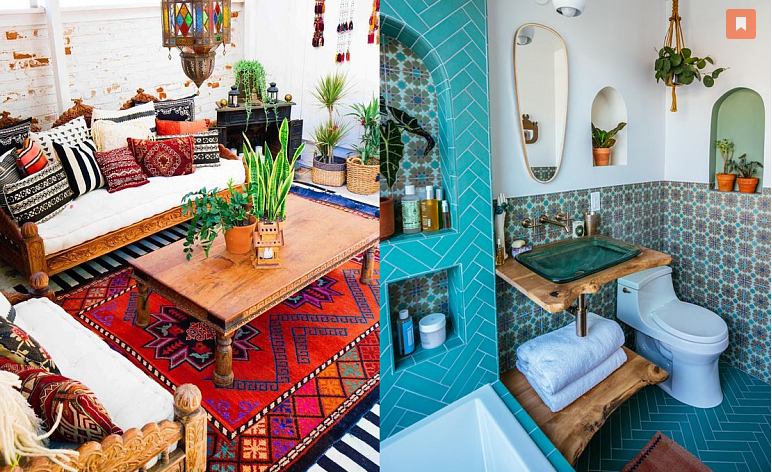
The main style-forming element in such an interior is an arch, it can be pointed, semicircular or oriental in the form of a pointed dome. Not only doorways, but also niches in the walls, screens and mirrors take an arched shape.

Moroccan colors warm, and the abundance of “touching” elements creates an anti-stress oasis in which you can hide even from the rainy autumn and the most ferocious winter.
 My Home maker