The world of interior design has its own laws – the laws of composition.
Chaos and order
Thoughtful designer interiors never look like a random collection of items. Even detailed spaces, in which different styles and eras are mixed, will not turn into chaos and absurdity if the composition is maintained.
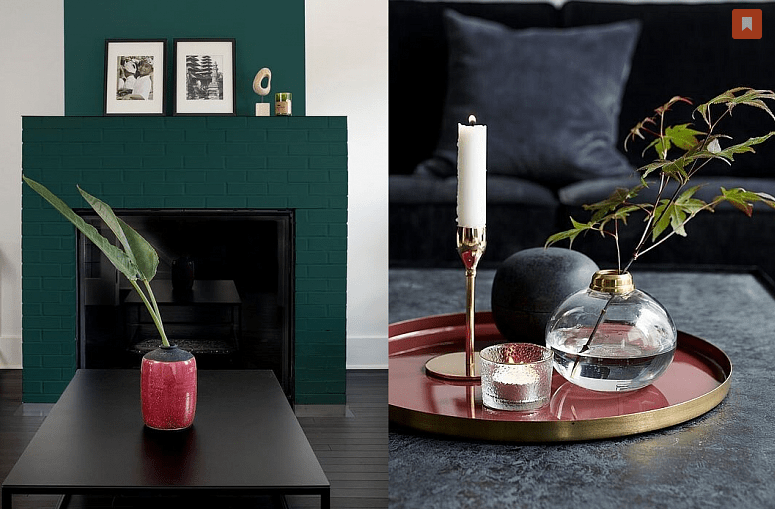
All objects in the room must interact with each other: contrast, overlap, support the overall geometry and concept.
Dominant and center
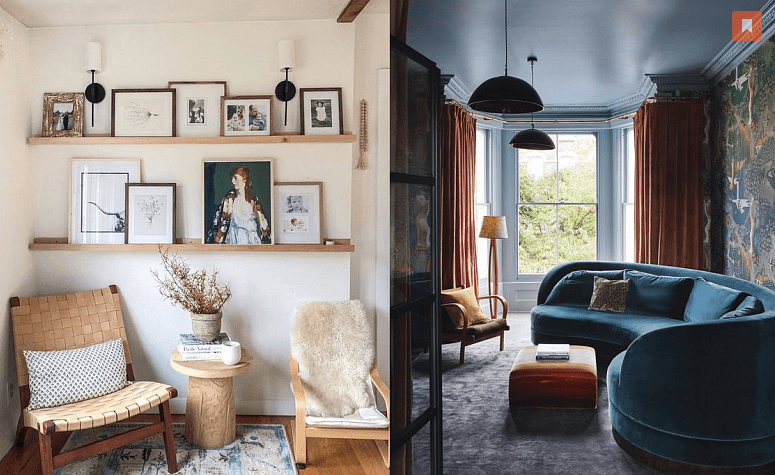
In the room, something should first of all attract the eye. We go into the room and look only at it: at the dominant part of the composition, and only then we notice the rest of the objects. A dominant can be distinguished by color, shape, or scale. The dominant often coincides with the center of the interior composition.
The center of the composition and its dominant part are not always the same. For example: the center can be a large table in the dining area, but the ceiling with an artistic finish will dominate the entire space.
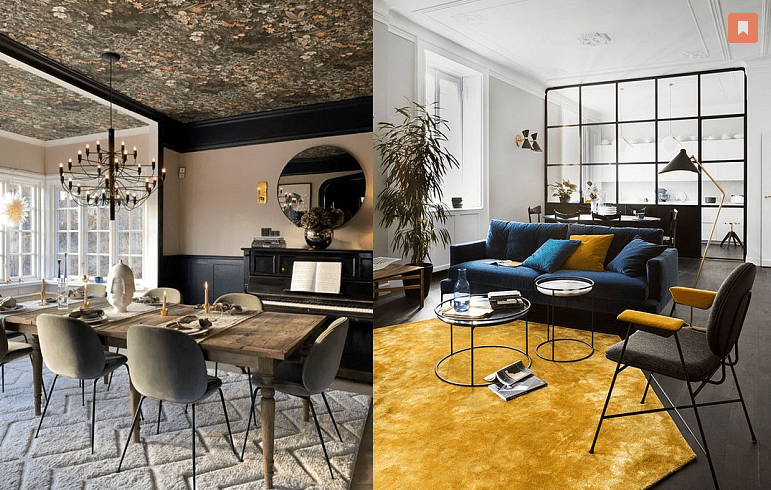
Symmetry and asymmetry
Objects can be harmoniously positioned around the compositional center using symmetry or asymmetry.
Symmetry is a logical way of organizing space, which can either mirror parts of a composition identically, or simply distribute objects of similar shapes and sizes evenly around a chosen axis. Simple examples: the same bedside tables with the same table lamps on either side of the headboard; two floor lamps on the sides of the sofa; a sofa opposite two armchairs, similar in size and shape; identical shelving on both sides of the fireplace portal.
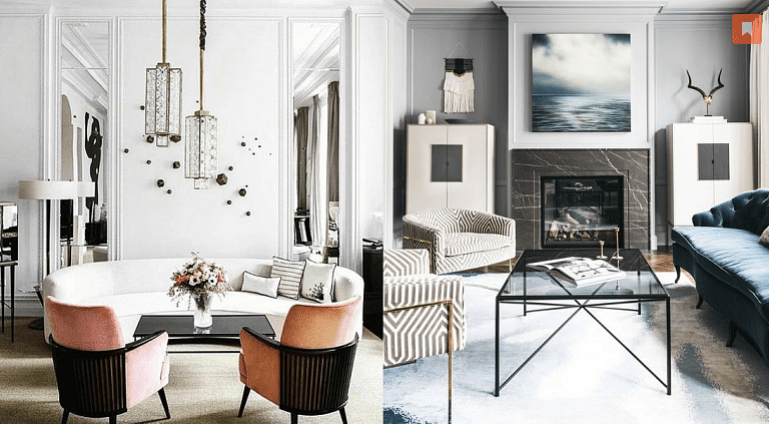
Asymmetry can be either dosed in the decor or act as a way of placing objects in space. The asymmetry of the composition gives dynamics to the space, and to the interior a more habitable look. Balancing such a space allows the color scheme and geometry. At the same time, the arrangement of objects does not look random and, as in the case of symmetry, obeys the principles of visual balance: you cannot force two-thirds of the room with furniture, and leave a third of it empty. Asymmetry is also a type of balance.
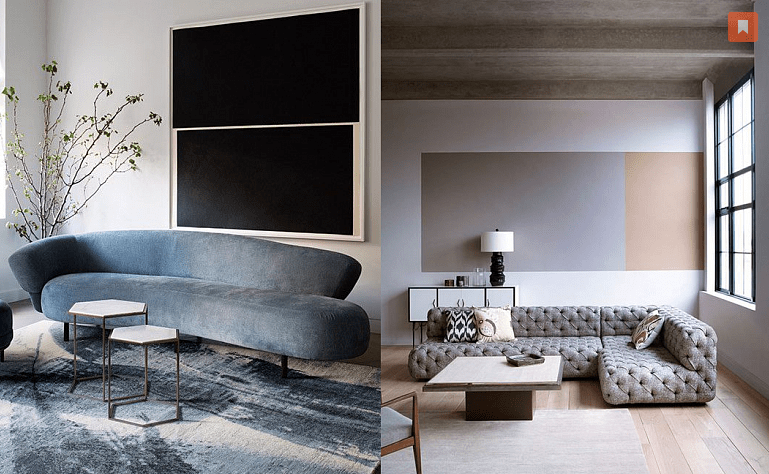
Kinship and rhythm
Psychologists say that the human brain tends to perceive images in a holistic manner. Therefore, it is more comfortable for us to be in harmonious interiors, the elements of which are combined with each other due to texture, color, shape or repeating pattern. We subconsciously like repetitive elements that allow us to form a complete picture.
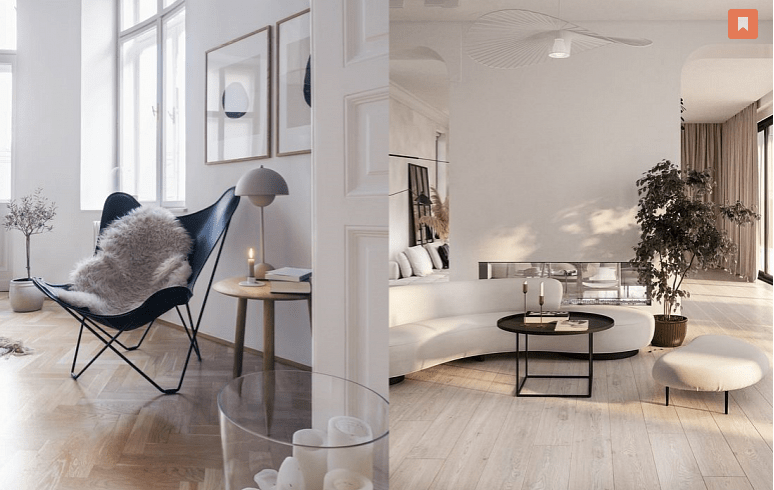
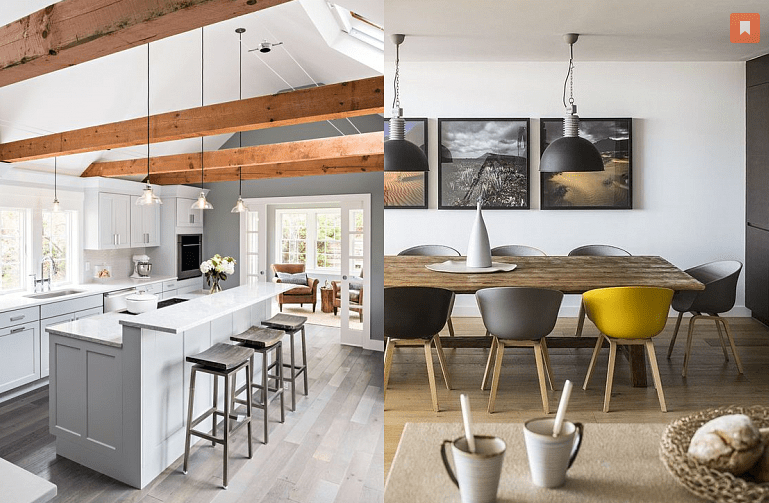
What is called “rhythm” appears in the interior due to the repeated repetition of related or identical elements. Examples include ceiling beams, columns, arched openings, matching lights, or dining chairs. An interesting design technique is to break the rhythm, for example: among identical chairs, one contrasting in color or texture can be worn.
Contrasts and accents
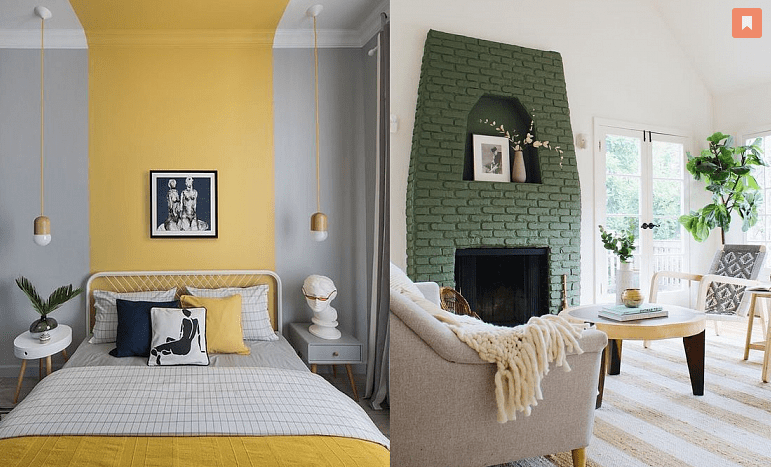
Contrast of colors and / or textures is one of the main expressive means of modern design. A smooth matte surface next to a rough concrete wall or brutal brickwork, an active print on an accent wall in contrast to a minimalistic finish, contrasting color accents on a neutral background – there are many options.

 My Home maker