Its oriental variety continues to inspire designers and architects around the world, largely because Japanese minimalism is not just a style, but a worldview.
The origins of aesthetics
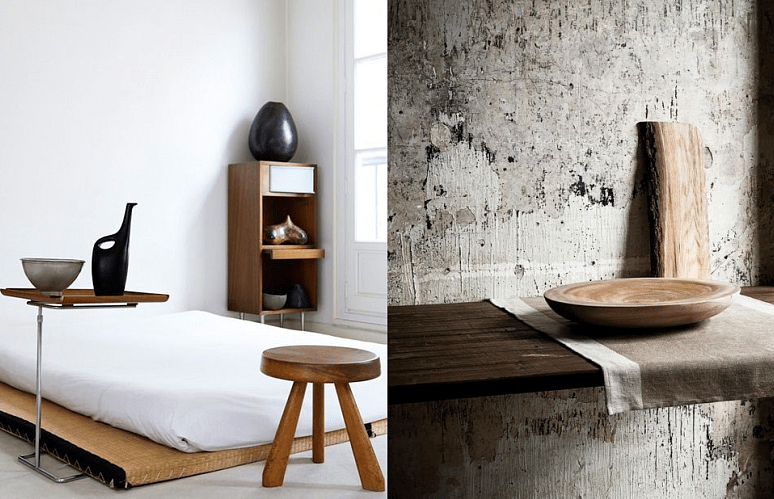
Japan is the birthplace of interior minimalism. At a time when luxurious interior styles reigned in the West, from classicism to art deco, the Japanese interior remained true to tradition and cultural values, and eventually turned into a fashion trend that swept the world in the 21st century.
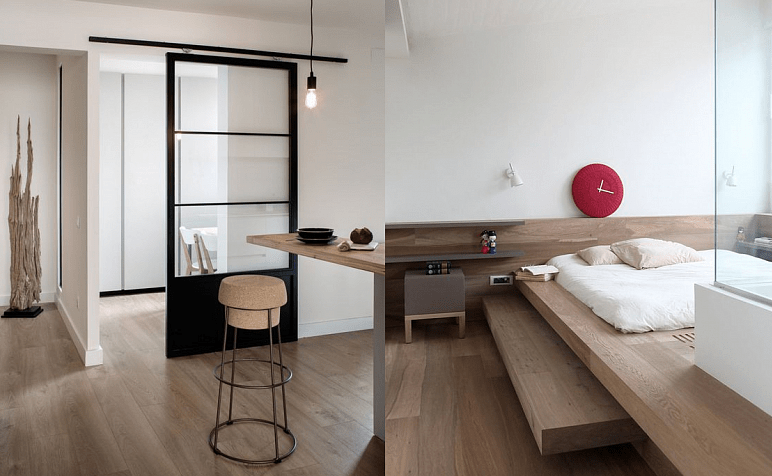
But Japanese minimalism has a more practical explanation: frequent earthquakes forced to abandon brick buildings in favor of houses made of paper and bamboo. The interior filling also had to match, no bulky furniture, only that which is easy to remove, fold and unfold. Futon is a traditional mattress that unfolds on the floor and is still a popular alternative to a bed in Japan.

Minimalism today
The style, which came from the most high-tech country in the world, becomes a good basis for modern everyday scenarios, is friendly with technology, although it prefers to hide it behind furniture facades, meets modern eco-trends and works well in tandem with styles with a related semantic load. Japanese minimalism is especially friendly with Scandinavian styles. Ergonomic Danish chairs feel great in the company of rice paper lanterns, sliding partitions and Japanese ceramics.
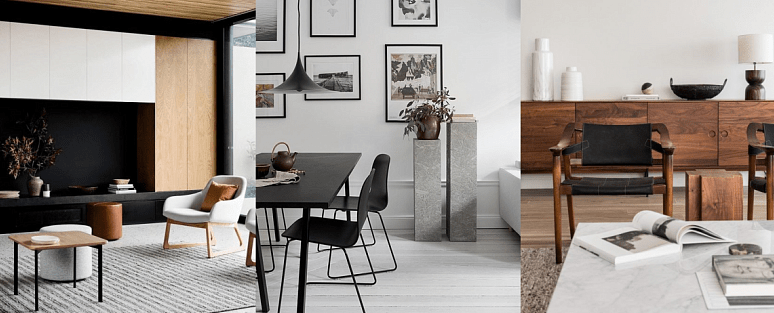
But the main reason for the popularity of Japanese minimalism is its ideological concept, which has now become a fashionable phenomenon. The same reason can be explained by the outbreak of popularity of the Scandinavian style, which blinded everyone with snow-white interiors a few years ago. The Scandinavian approach is also weighed down by some household philosophy known as hygge, which taught us to see beauty in simplicity and find happiness in everyday life. Japanese minimalism sets itself more serious tasks: to teach a person to be in harmony with the objective world and nature, to be distracted from the hustle and bustle, to discipline thoughts and feelings, to see beauty in the imperfect, and value in the mundane and fleeting.
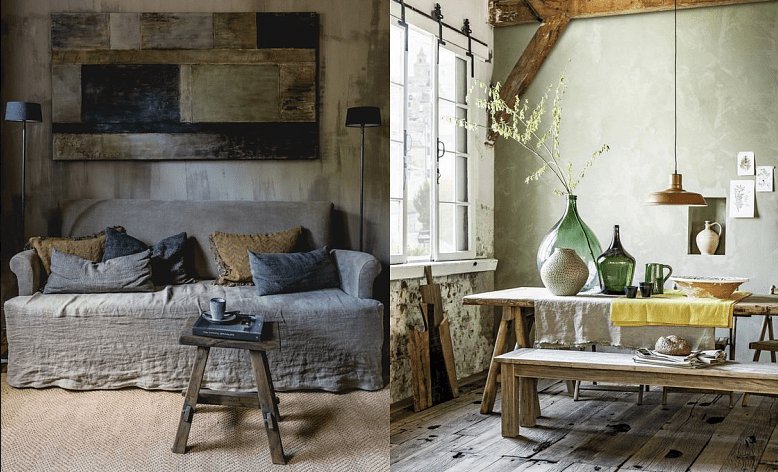
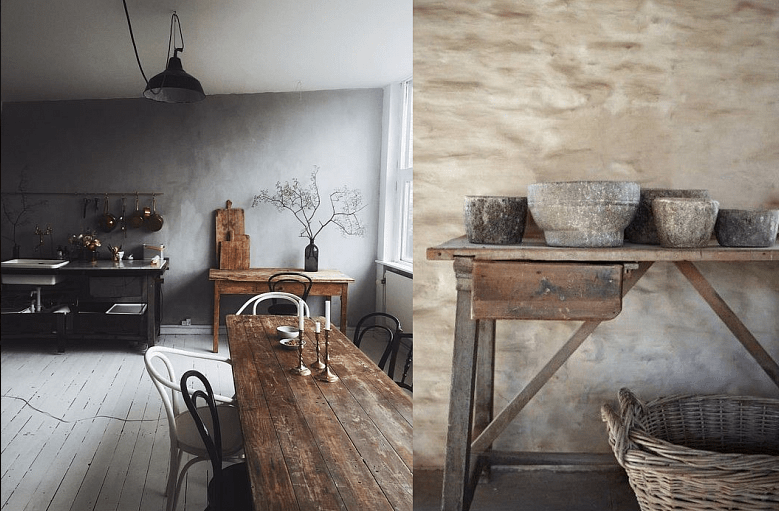
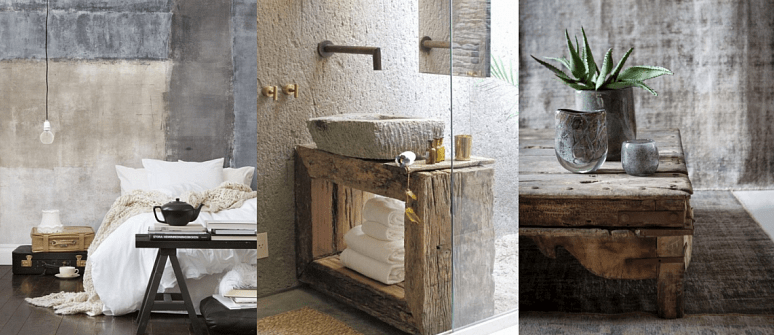
Wabi-sabi in Japanese culture is a rather abstract concept. It becomes more understandable in its adapted Western interpretation. In a simplified version, wabi-sabi is interior asceticism, preaching closeness to nature and the beauty of imperfection, calling for abandoning the pursuit of ideal and luxury. In simplified translation, “wabi” is “modest simplicity”, and sabi is “a raid of time.” The style gravitates towards vintage, deliberate aging of things and finishes, demonstration of flaws and textures as close as possible to living nature.
Japan in your home
Japanese minimalism does not like creative disorder, but loves cleanliness, discipline in relation to things and calmness. Therefore, it is not suitable for everyone. Even if you like it conceptually and seems like a good choice in theory, this style can be an inconvenient decision in everyday life, especially for large families with children.
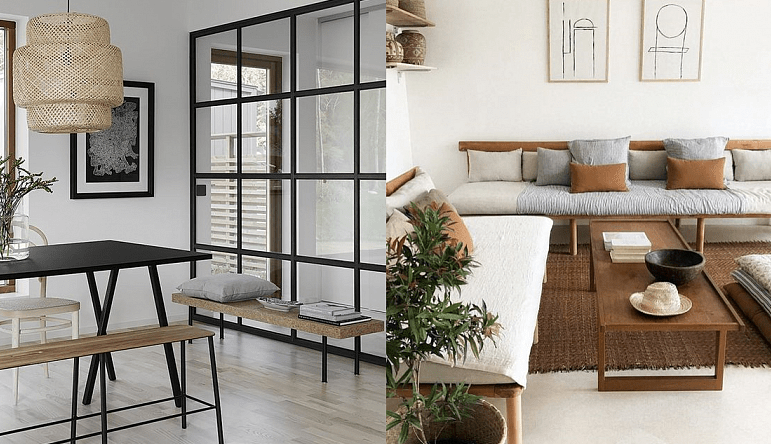
Decorative plaster, paper and textile wallpapers will take root on the walls, wood on the floor. The color scheme is restrained, natural. The walls are usually light, often white, because white is synonymous with emptiness. The mood will be set by the style-forming elements: low furniture, paper lamps, sliding interior partitions, screens, tatami mats, rough natural textiles, aged wabi-sabi-style ceramics and indoor plants, especially if it is bonsai.
 My Home maker